Why Microsoft Default D365 F&O Security Roles Are a Compliance Trap — And How to Build Roles That Actually Pass an Audit
Microsoft default D365 F&O security roles are deliberately broad — built to pass sales demos not SOX audits. Discover the hybrid risk based approach to building compliant custom roles that protect your financial ledger.

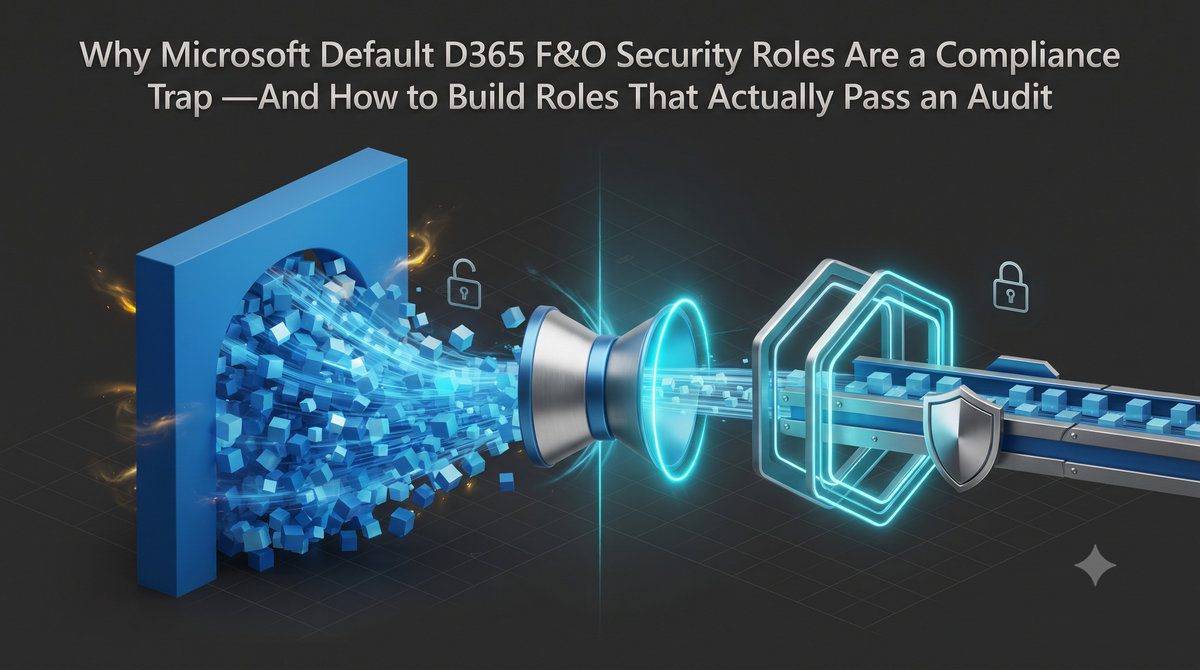
When a Chief Financial Officer discovers that their enterprise resource planning system is running entirely on unmodified, out-of-the-box Microsoft security roles, the financial and regulatory anxiety is instant. For an IT Audit Director facing an upcoming review, realizing that nobody ever questioned those default assignments triggers an immediate compliance crisis.
Default security roles in Microsoft Dynamics 365 Finance & Operations were never engineered for production environments. They were designed to pass sales demonstrations without throwing a single access-denied error.
Relying on them in a live enterprise tenant creates an immediate audit finding, exposes hidden Segregation of Duties (SoD) violations, and quietly inflates monthly software spend. Fixing this structural flaw requires moving away from guesswork and adopting a disciplined framework for D365 F&O security role design.
Why Default Roles Are a Compliance Trap
When software vendors build a global ERP platform, their primary objective is frictionless user adoption. Microsoft ships hundreds of preconfigured security roles so prospective buyers can click through every module during a demo without hitting permission walls.
To achieve this, those roles are intentionally broad. They combine transactional entry points, master data maintenance, and administrative overrides into single role assignments.
This creates an inherent misalignment. Broader access maps directly to higher-tier license requirements, forcing organizations into unnecessary licensing overspend. More dangerously, it hands everyday operational users powerful backend capabilities that violate fundamental internal control standards.
The Two Flawed Extremes: Top-Down vs. Bottom-Up
When organizations finally decide to fix their security model, they usually fall into one of two traps.
The Top-Down Approach (Copy and Trim)
Administrators take a default Microsoft role, clone it, and start stripping away menu items until the user stops complaining.
- The Flaw: This method inherits hidden privileges embedded deep within the underlying privilege hierarchies. You are left with a bloated role carrying invisible security risks.
The Bottom-Up Approach (Build From Scratch)
Security teams attempt to map out every single business process from zero without referencing system architecture.
- The Flaw: This approach takes months, paralyzes project timelines, and frequently breaks core system workflows because critical underlying tables were accidentally omitted.
The Hybrid Risk-Based Approach
Elite governance requires a middle ground: the hybrid risk-based role design strategy.
Instead of treating every module equally, you concentrate your security engineering budget where financial fraud risk actually lives. You build custom roles from scratch for high-risk domains—such as accounts payable, vendor master data management, bank account configuration, and general ledger journal posting.
For low-risk operational areas—like viewing inventory lookups or printing standard logistics reports—you copy standard roles, trim the excess, and lock them down. This maximizes protection where money moves while saving hundreds of hours of administrative overhead.
Persona-Based vs. Task-Based Roles
Structuring your security catalog requires a clear distinction between how users operate and how permissions are assigned.
- Persona-Based Roles: Designed around broad job titles (e.g., Accounts Payable Manager). These work well for high-level organizational mapping but must be restricted to prevent over-assignment.
- Task-Based Roles: Designed around specific operational functions (e.g., Vendor Bank Account Creator). These are granular, highly secure, and much easier to defend during an audit.
By favoring task-based role construction for sensitive workflows, you prevent users from accumulating toxic permission combinations over time.
Using Task Recordings and Telemetry for Least Privilege
Guesswork has no place in enterprise security architecture. Effective role engineering relies on evidence-based telemetry.
Security teams can leverage native Task Recordings to capture legitimate business processes step-by-step. When a finance clerk processes a vendor invoice, the recording logs every menu item, form, and table touched during the workflow.
Exporting this data into the security framework allows architects to generate precise, least-privilege custom privileges. You grant access exclusively to what the telemetry proves is necessary, starving out unauthorized system access.
Naming, Documentation, and Security as Code
Disorganized security structures fail audits just as quickly as over-privileged users. Professional role engineering demands strict operational discipline.
- Strict Naming Conventions: Prefix every custom object (e.g.,
CUS_AP_InvoiceClerk) to separate proprietary configurations from Microsoft default items instantly. - Living Documentation: Maintain an audit-ready matrix mapping every custom role to its underlying business justification and process owner.
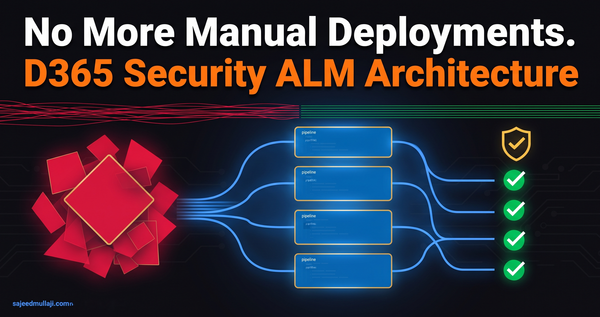
- Security as Code: Treat security modifications like application code. Push changes through a structured deployment pipeline from Development to Test to Production, ensuring no ad-hoc edits happen directly in live environments.
The Three Mandatory Gates Before Go-Live
Before any custom role is deployed to a production environment, it must clear three non-negotiable gates:
- The Business Approval Gate: The respective department head must sign off on the exact operational scope of the role.
- The SoD Review Gate: The security team must run a conflict analysis check to ensure the role does not introduce cross-module fraud exposure.
- The License Impact Gate: The system administrator must verify that the underlying privileges do not inadvertently push the assigned users into a higher, more expensive license tier.
Skipping even one of these gates invites audit failure and unexpected financial exposure.
The Business Case: The Cost of Inaction
Ignoring default security role risks carries severe, compounding consequences:
- Fraud Exposure: Unmonitored, over-privileged default roles provide rogue employees with clear pathways to manipulate financial records and execute unauthorized disbursements.
- Audit Failure: External auditors routinely flag unmodified Microsoft default roles as material weaknesses, leading to qualified audit opinions and mandatory remediation projects.
- License Inflation: Relying on broad out-of-the-box definitions forces organizations into continuous license overspend.
Replacing default configurations with disciplined, least-privilege role engineering protects your financial assets, satisfies strict regulatory mandates, and establishes an uncompromised foundation of trust.
Q&A
Q: Why do unmodified Microsoft default roles trigger immediate audit findings during a SOX review?
A: Default Microsoft roles are intentionally built broad to support software demonstrations across multiple modules without restriction. Using them in production violates core Segregation of Duties (SoD) principles by granting users unmonitored access to high-risk financial transactions.
Q: What is the hybrid risk-based approach to D365 F&O role design?
A: The hybrid approach concentrates intensive custom role engineering on high-risk financial areas like accounts payable and general ledger posting, while applying trimmed, controlled copies of standard roles to low-risk operational functions. This optimizes security engineering effort where financial fraud risk is highest.
Q: Why must every custom security role pass a license impact check before deployment?
A: Certain backend privileges embedded within custom or default roles can inadvertently elevate a user's required license tier from a cost-effective operational level to an expensive enterprise level. Verifying license impact prevents unexpected software overspend.
Full architecture breakdown at sajeedmullaji.com